Homeostasis
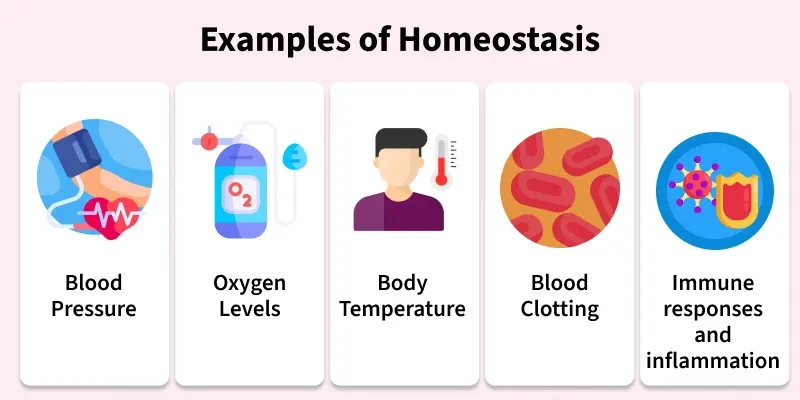
Homeostasis is the process by which living organisms maintain a stable internal environment despite changes in the external environment. In simple words, it keeps the body's internal conditions (like temperature, water level, blood sugar, pH, etc.) balanced and constant.
Characteristics of Homeostasis
- Maintains Internal Balance: Keeps the body’s internal environment stable.
- Self-Regulating: Works automatically through built-in control systems.
- Uses Feedback Mechanisms: Depends on negative feedback to correct imbalances.
- Dynamic Process: Conditions stay within a normal range.
- Involves Multiple Body Systems: Organs, hormones, and processes work together.
Mechanism of Homeostasis
- Stimulus: A change occurs (e.g., rise in temperature).
- Receptor (Sensor): Specialized cells detect the change.
- Control Center: Usually the brain, which processes the information.
- Effector: Carries out the corrective action.
- Response: Restores the internal condition to normal.
Body Systems and Homeostasis
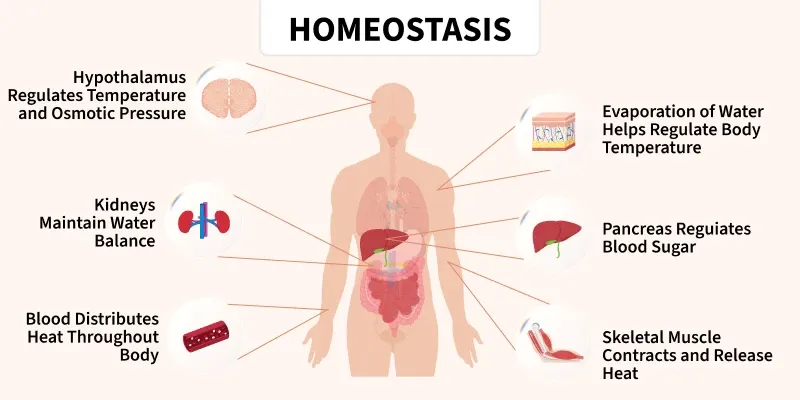
- Nervous System: Hypothalamus regulates temperature, hunger, and thirst.
- Endocrine System: Uses hormones to control blood pressure and metabolism.
- Respiratory System: Controls oxygen and CO2 levels to maintain blood pH.
- Urinary System: Removes nitrogenous waste and manages fluid levels.